
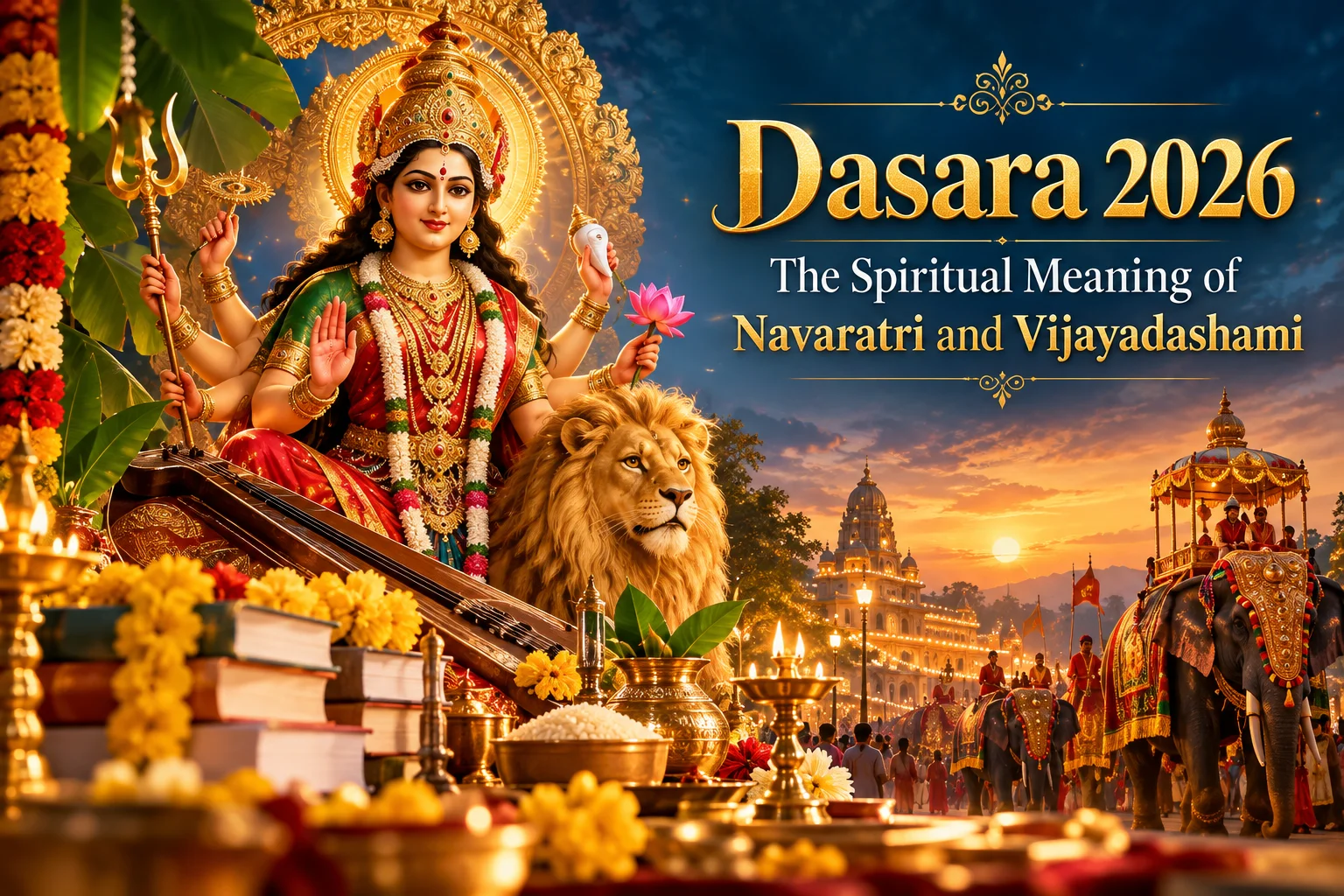
Dasara, also known as Dussehra or Vijayadashami, is one of the most meaningful festivals in the Hindu calendar. It marks the triumph of good over evil and reminds people that courage, truth and dharma can guide them through difficult moments. Celebrated at the end of Navaratri, Dasara brings together prayer, family traditions, cultural celebrations and the hope of a fresh beginning.
For many families, the festival is also a time to pause, express gratitude and set positive intentions for the months ahead. Traditions vary by region, but the central message remains familiar: face challenges with patience, act with integrity and nurture the strength to do what is right.
Let light, courage and wisdom lead the way.
Dasara can be a meaningful reminder to release unhelpful habits, renew your focus and move forward with a calm and determined mind.
What Does Dasara Symbolise?
The word Vijayadashami is commonly understood as the “tenth day of victory.” In the Ramayana tradition, the day celebrates Lord Rama’s victory over Ravana. In traditions associated with Goddess Durga, it marks the victory of the Divine Mother over Mahishasura. Both stories express the same enduring idea: arrogance and destructive forces can be overcome by courage, clarity and righteousness.
These stories are also understood symbolically. The struggle between good and evil can represent the choices people make every day — whether to respond with patience or anger, honesty or convenience, compassion or indifference.
The Connection Between Navaratri and Dasara
Navaratri is observed over nine nights, with prayers and customs dedicated to the Divine Feminine. The tenth day, Vijayadashami, brings the festival to a close and is celebrated as a moment of victory and auspicious beginnings. Depending on family and regional customs, devotees may observe fasting, visit temples, arrange a golu display, perform special pujas or take part in community celebrations.
Prayer and gratitude
Set aside time for prayer, reflection and appreciation for the support and blessings in your life.
Knowledge and growth
Many families honour books, tools, instruments and work equipment, expressing respect for learning and livelihood.
Begin with intention
Vijayadashami is considered an auspicious time in many traditions to begin learning or start a meaningful new effort.
Popular Dasara Traditions
Ayudha Puja
In several South Indian communities, Ayudha Puja honours the tools, instruments and equipment used for work. People clean their workspaces and offer prayers as a gesture of gratitude for their livelihood and the skills they use each day.
Vidyarambham and learning
Some families mark the occasion by introducing children to writing or encouraging a new stage of learning. The practice reflects the belief that knowledge, discipline and curiosity are valuable foundations for life.
Golu, temple visits and community celebrations
In Tamil Nadu and other parts of South India, families may arrange golu displays, invite relatives and friends, visit temples and share traditional food. Regional customs differ, so families often follow the practices passed down through their own communities.

A simple festival reflection: What is one habit you can leave behind, one virtue you can strengthen and one positive step you can take after Dasara?
Dasara and an Astrology-Inspired Reflection
In Vedic astrology, auspicious occasions are often used as opportunities to reflect on intentions, discipline and the timing of new efforts. Dasara is widely regarded in many Hindu traditions as a favourable day to begin learning, take up a constructive activity or make a sincere commitment to personal improvement. Specific muhurta timings, however, depend on the local panchang, location and the year’s calendar.
If you are planning a ceremony or an important event, consult a reliable local panchang or an experienced practitioner for date- and location-specific guidance. General festival articles cannot determine an individual’s horoscope or guarantee a particular outcome.
How to Celebrate Mindfully
- Begin the day with prayer or a few quiet moments of gratitude.
- Keep your home and workspace clean and welcoming.
- Respect family traditions while making room for meaningful personal practices.
- Share food, kindness or time with people who may need support.
- Choose one realistic goal and take the first step toward it.
- Celebrate responsibly and be considerate of your community and environment.
Frequently Asked Questions
1. What is the main message of Dasara?
Dasara celebrates the victory of good over evil and encourages people to practise courage, truth, discipline and compassion.
2. Is Dasara the same as Vijayadashami?
The names are commonly used for the festival observed on the tenth day after Navaratri, although regional stories and customs may differ.
3. Why is Ayudha Puja observed around Dasara?
Ayudha Puja expresses gratitude for the tools, instruments and equipment that support people’s work and livelihood in several regional traditions.
4. Is Dasara considered a good day to start something new?
Many traditions consider Vijayadashami favourable for beginnings such as learning or starting a constructive activity. For a specific ceremony or muhurta, check the local panchang.
5. Can astrology provide an exact personal prediction for Dasara?
A general festival article cannot provide an individual prediction. A personal reading would require birth details and should be understood as traditional guidance rather than a guaranteed outcome.
May Dasara bring clarity to your thoughts, courage to your choices and peace to your home. Wishing you and your family a meaningful and joyful Vijayadashami.